KITCHEN SINK INSTALLATION
Round Rock, TX
Kitchen Sink Installation for a Dry, Functional Kitchen
Know when a new sink solves the problem—and when a repair or drain service makes more sense.
Kitchen Sink Installation is a good fit for a cracked basin, rusted rim, failing faucet deck, damaged cabinet opening, or a remodel that needs a deeper or better-configured sink. The Round Rock Plumber can help when recurring leaks beneath the strainer or supply connections have left damp patches in the cabinet floor. It is also sensible if an old sink no longer accommodates a garbage disposal, dishwasher drain hose, or the way your household uses the kitchen.
A new sink will not cure every plumbing symptom. Slow drains may need a cleanout or blockage removal, while discoloured water, low pressure, banging pipes, or no hot water can point to supply lines, a pressure regulator, or a water-heater issue. Running toilets are unrelated to the kitchen sink and usually need toilet repair. Identifying the actual source before replacing a basin avoids spending money on a fixture that was not causing the trouble.


Make the Visit Easier From the Start
Before the appointment, take photos of the sink, faucet, cabinet interior, and any damp patches or staining. Note the sink’s approximate width and depth, the number of faucet holes, disposal model, and where the dishwasher hose enters the drain. Clear cleaners, pans, food bins, and stored items from the cabinet and countertop. If you are also considering shower installation, keep that request separate so the technician can allow enough time and bring the right fittings.
Write down when the leak, slow drain, low pressure, or water discoloration began, and mention any recent countertop or cabinet work. Keep children and pets away from the work area, and make sure the shut-off valves under the sink are accessible. Do not force seized valves, pour chemical drain cleaner into the trap, or tighten connections with pliers just before the visit. Caustic cleaner can remain in the pipe and make disassembly unsafe.
Enjoy a Sink That Drains Cleanly and Stays Dry
After Kitchen Sink Installation, water should flow steadily through the faucet and drain without pooling around the strainer, dripping from the trap, or wetting the cabinet base. A brief smell from new sealant or a few small water drops after testing can be normal during the first day. Check beneath the sink after running both hot and cold water for several minutes, especially around supply lines, shut-offs, the disposal flange, and dishwasher installation connection.
Get back in touch if slow drains return, low pressure affects only the new faucet, or damp patches appear on the cabinet floor. Discoloured water lasting beyond an initial flush, banging pipes, no hot water, or a running toilet usually indicates a separate plumbing issue worth checking promptly. Keep strainers clear of food scraps, avoid grease in the drain, and inspect the trap and valve area every few months. Prompt attention prevents a small drip from swelling particleboard or damaging flooring.
See Exactly How Your New Sink Takes Shape
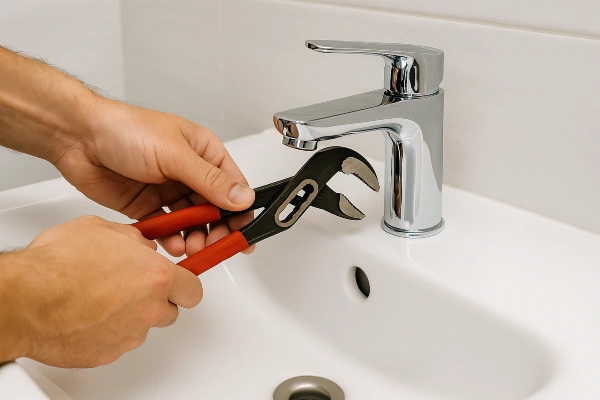
The visit starts with confirming the sink size, countertop cutout, faucet holes, cabinet clearance, and drain layout. The water supply is isolated at the under-sink shut-offs; if those valves cannot close fully, the main supply may need to be turned off. The existing faucet, basket strainer, trap, supply lines, and disposal connections are removed carefully. If drainage has been slow, a camera inspection through the drain or cleanout can reveal grease buildup, offset pipe, or a deeper obstruction before the new sink is fitted.
The new basin is seated and sealed, then the faucet, valves, supply lines, strainer, trap, and disposal drain are connected. Soldering may be needed for older copper piping, while re-seating fixtures ensures the sink rim and drain assemblies sit flat. Hydro jetting is used only where a drain line needs thorough cleaning, not as a substitute for installation. Pressure testing checks every connection. If no hot water or pressure issues are found, related equipment such as tanks, anode rods, thermostats, or pressure regulators may also be assessed.
The Round Rock Plumber
2107 Stirrup Dr, Round Rock, TX 78681
(512) 980-6521
contact@theroundrockplumber.net
Hours of Operation
Open 24 Hours